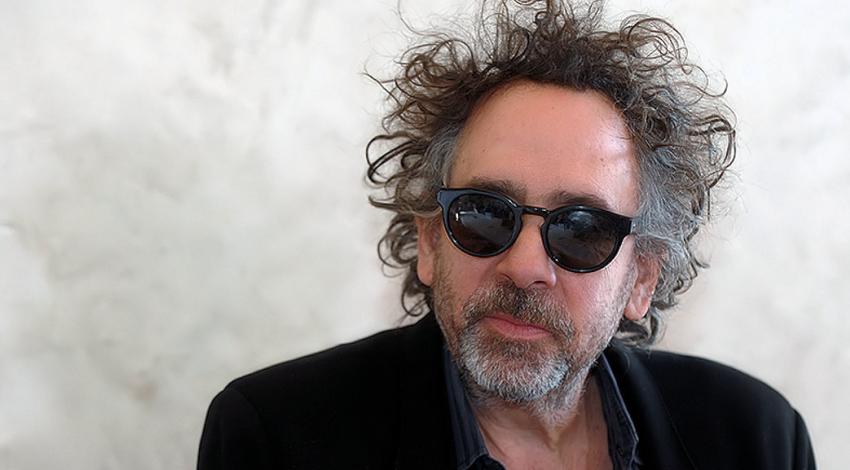
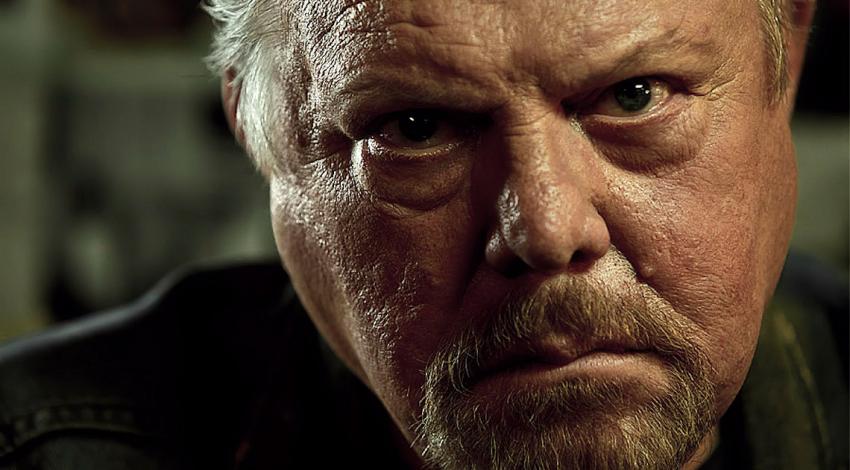
Klaus Badelt | Composer

Badelt's Russian Tea Party with Klaus Badelt

For K-19: The Widowmaker, you wrote a very orchestral, traditional score. What was your motivation for doing so?

Well, Harrison Ford as a Russian. That's not very convincing by itself, and so you will need music to help sell it. At the beginning, when I first started working on the movie, it ran about four or five hours long. There was a large introduction to the characters before they launched the boat, with Harrison Ford's character, his wife, his whole history. It was all there. So you had a much bigger emotional buildup for what would eventually happen in the film. And therefore, as a Russian, he was much more believable - at least, compared to what you have now. So the music had an important job at the beginning to make you feel the roots and history of the characters. To tell you where they're from, what they feel, why Captain Vostrikov has issues with his father. Is he really the cold strict military government type? Why is Liam Neeson's character so close to his crew? We just jump right in, so you don't get it. You don't have the 300 years of history and how connected Russian society is to the military, and their special pride, and the feel of it. If you go to Russia, and spend some time there, it's quite different. They're a very proud people......
0 comments

"The Greatest Show on Earth" (1952)

"The Greatest Show on Earth" (1952)

"The Greatest Show on Earth" (1952)

The dramatic lives of trapeze artists, a clown, and an elephant trainer are told against a background of circus spectacle. - "The Greatest Show on Earth" is American drama film produced and directed by Cecil B. DeMille; shot in Technicolor; and released by Paramount Pictures. Set in the Ringling Bros. and Barnum & Bailey Circus, the film, narrated by producer/director, Cecil B. DeMille, stars Betty Hutton and Cornel Wilde as trapeze artists competing for the center ring, and Charlton Heston as the circus manager running the show. James Stewart also stars in a supporting role as a mysterious clown who never removes his make-up, even between shows, while Dorothy Lamour and Gloria Grahame also play supporting roles."

Classic (Released Prior to yr 2000)

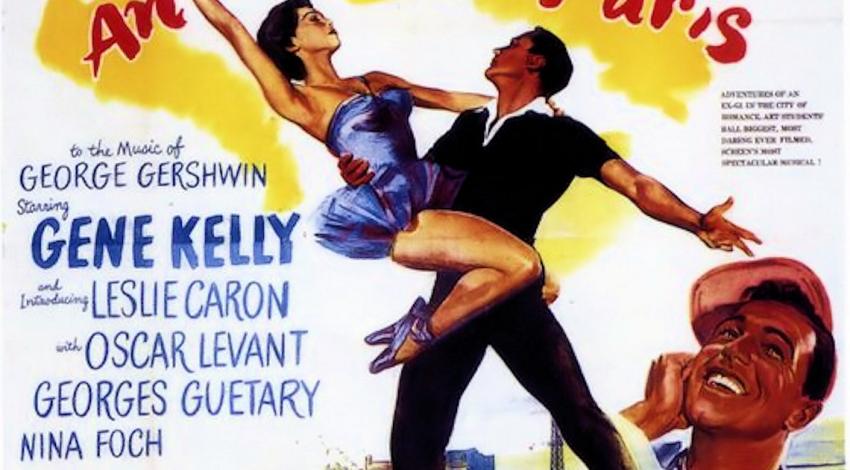
"An American in Paris" (1951)

"An American in Paris" (1951)

"An American in Paris" (1951)

Three friends struggle to find work in Paris. Things become more complicated when two of them fall in love with the same woman. - "An American in Paris" is a 1951 American musical film inspired by the 1928 orchestral composition "An American in Paris" by George Gershwin. Starring Gene Kelly, Leslie Caron, Oscar Levant, Georges Guétary, and Nina Foch, the film is set in Paris, and was directed by Vincente Minnelli from a script by Alan Jay Lerner. The music is by George Gershwin, with lyrics by his brother Ira, with additional music by Saul Chaplin, the music director.

The story of the film is interspersed with dance numbers choreographed by Gene Kelly and set to Gershwin's music. Songs and music include "I Got Rhythm", "I'll Build A Stairway to Paradise", " 'S Wonderful", and "Love Is Here to Stay". The climax of the film is "The American in Paris" ballet, a 17-minute dance featuring Kelly and Caron set to Gershwin's "An American in Paris". The ballet sequence cost almost half a million dollars to shoot."

Classic (Released Prior to yr 2000)
Product Four

Fourth Product

Phosfluorescently e-enable adaptive synergy for strategic quality vectors. Continually transform fully tested expertise with competitive technologies. Appropriately communicate adaptive imperatives rather than value-added potentialities. Conveniently harness frictionless outsourcing whereas state of the art interfaces. Quickly enable prospective technology rather than open-source technologies.

Third Product

Third Product

Phosfluorescently e-enable adaptive synergy for strategic quality vectors. Continually transform fully tested expertise with competitive technologies. Appropriately communicate adaptive imperatives rather than value-added potentialities. Conveniently harness frictionless outsourcing whereas state of the art interfaces. Quickly enable prospective technology rather than open-source technologies.

Second Product

Second Product

Phosfluorescently e-enable adaptive synergy for strategic quality vectors. Continually transform fully tested expertise with competitive technologies. Appropriately communicate adaptive imperatives rather than value-added potentialities. Conveniently harness frictionless outsourcing whereas state of the art interfaces. Quickly enable prospective technology rather than open-source technologies.

image one

First Product

Phosfluorescently e-enable adaptive synergy for strategic quality vectors. Continually transform fully tested expertise with competitive technologies. Appropriately communicate adaptive imperatives rather than value-added potentialities. Conveniently harness frictionless outsourcing whereas state of the art interfaces. Quickly enable prospective technology rather than open-source technologies.

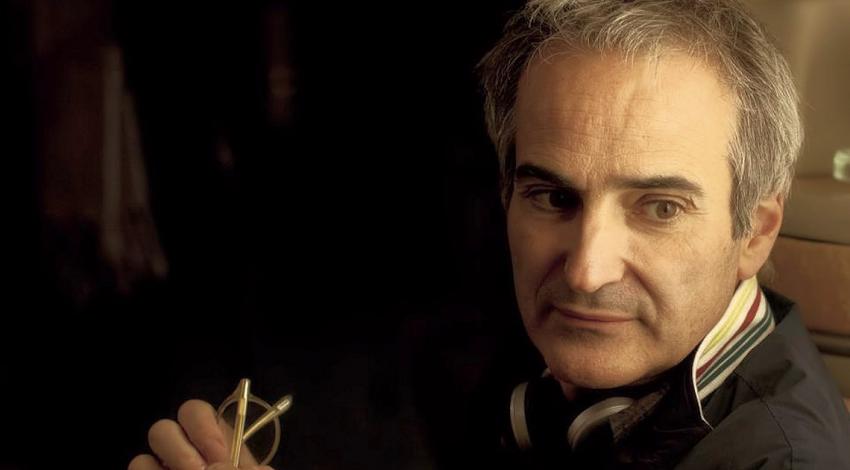
Olivier Assayas | Director

Seven Questions for Olivier Assayas

indieWIRE: Does "Irma Vep" belong to an aesthetic tradition?

Olivier Assayas: That's tough to answer because for the first time I've made a film which fit into a genre, which is movies about movies. I knew that I was on ground that had already been covered so that encouraged me to be as radical as I could, to invent my own way of thinking about cinema and not do it like Truffaut when he did "Day For Night". I tried to make something I'm not used to doing, which is comedy, but at the same time I thought this could be a comedy about an ambitious subject-- the creative process. It's like an exercise in film schizophrenia, and in that sense the film tries to move away from looking like anything else.

0 comments